.png)
Pomona Moves Forward on Title VI Settlement While Scripps Stands Still
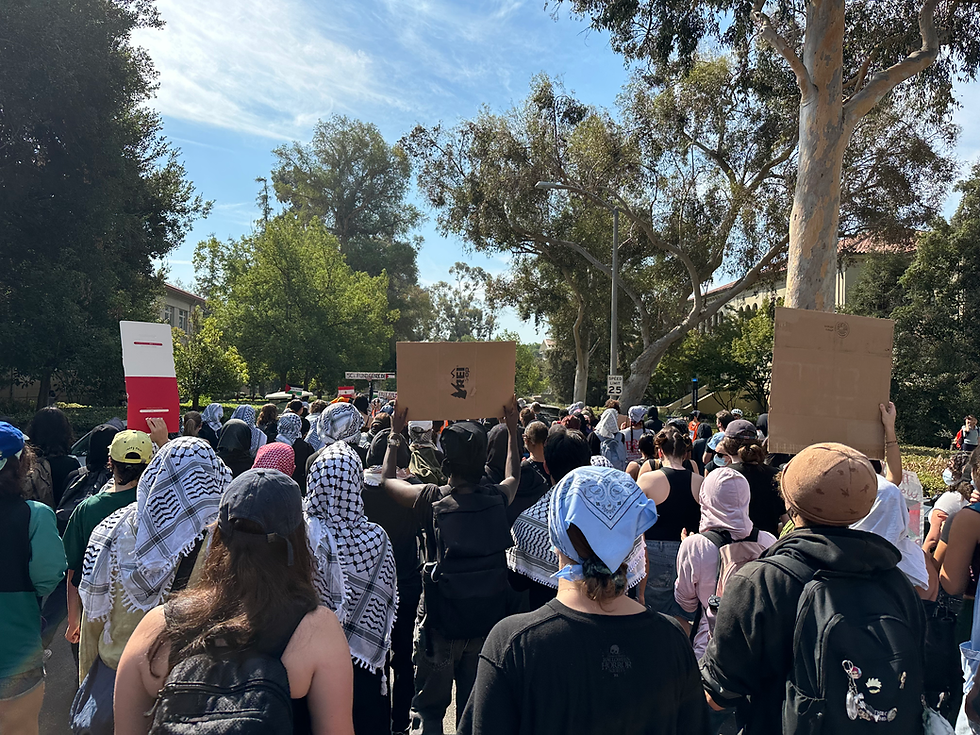
Two foundational principles of American law are colliding on college campuses across the country, and the Claremont Consortium is no exception.
Title VI of the Civil Rights Act of 1964 prohibits discrimination based on race, color, or national origin at any institution receiving federal funding. It bans overt acts of discrimination and requires schools to prevent hostile environments that interfere with students' access to education. When a school fails to act, it risks federal investigation, loss of funding, and litigation.
The First Amendment prohibits government institutions from censoring or punishing speech simply because it is offensive, controversial, or politically unpopular. That includes student protests, political organizing, and speech that challenges prevailing views on race, religion, immigration, or foreign policy. Private schools are not typically bound by the First Amendment the way public institutions are, but in California, the Leonard Law changes that.
The Leonard Law extends First Amendment protections to private colleges and universities in the state, meaning all five Claremont Colleges are legally required to protect free speech to the same degree as public universities. In practice, both public and private universities have tried to navigate this by enforcing 'time, place, and manner' restrictions - rules that govern when, where, and how speech and protest can occur, applied universally regardless of the message. But when those rules are selectively enforced (if one group is allowed to encamp while another is not), or when the content of the speech is what actually drives the university's response, the legal problem begins.
Universities are caught in a bind that has no clean legal resolution. Enforce Title VI too aggressively, and you risk silencing protected speech. Enforce it too loosely, and students facing harassment are left without recourse, and the institution risks losing federal funding.
This tension is now playing out in Claremont. Pomona is moving slowly to meet its federal obligations, and Scripps remains under investigation by the U.S. Department of Education’s Office for Civil Rights (OCR).
The Pomona Settlement
In April 2024, the Louis D. Brandeis Center, the Anti-Defamation League (ADL), Hillel International, and the law firm Arnold & Porter filed a federal Title VI complaint against Pomona College. The complaint followed a series of campus incidents, including an April 2024 protest in which students stormed President Starr's office and refused to leave, resulting in 20 arrests, and other incidents of alleged antisemitism documented by the Independent. Six months later, on the one-year anniversary of the October 7 Hamas attacks, students occupied Carnegie Hall, zip-tied doors, injured an employee, and spray-painted graffiti on the walls. The complaint argued that Pomona failed to adequately address alleged antisemitism experienced by Jewish students in connection with these protests.
In December 2025, Pomona reached a resolution agreement with the organizations that filed the complaint, through a mediation process overseen by the OCR. Under the terms of the settlement, the college agreed to appoint a dedicated Title VI coordinator; consider the International Holocaust Remembrance Alliance (IHRA) definition of antisemitism when evaluating discrimination complaints; mandate annual Title VI training for all students, faculty, and staff; update its masking policy so that protesters could be asked to identify themselves to campus officials; and ban encampments.
More than four months after signing its settlement agreement, Pomona had still not appointed the Title VI coordinator the agreement required. A student representative from the Associated Students of Pomona College told the Claremont Courier that ASPC had received little communication from the college about any of the settlement's changes. "Nobody in any authoritative position has come to ASPC and been like, 'This is the training that you guys are going to have to do,'" the student said. "Nobody said anything at all." In early May 2026, the college announced it was only beginning recruitment efforts for the position.
In a statement provided to the Claremont Independent in March 2026, a Pomona College spokesperson acknowledged the gap and described the work as actively underway. "As part of its recently signed resolution agreement, Pomona is actively implementing a series of measures designed to further strengthen our Title VI infrastructure and practices," the spokesperson said. "This work is already underway and includes appointing a Title VI coordinator, updating policies and procedures, and assembling an Advisory Council on Jewish Life and Antisemitism. We expect to complete this work in the spring, and will share progress with our community in the coming weeks." The statement framed the College's obligations in broad terms. "Pomona College is deeply committed to protecting the rights of every member of our community," it read. "That commitment includes safeguarding freedom of expression and fulfilling our obligations under Titles VI and VII of the Civil Rights Act, as well as Title IX."
The spokesperson also confirmed that annual Title VI training, covering both antisemitic and Islamophobia-based discrimination, would be delivered later in spring 2026. In early April 2026, Pomona students received an email announcing the mandatory Title VI training, which was required to be completed before course registration. The training consisted of a Canvas module with a short quiz, and students could complete it without reading any of the attached documents.
A Jewish Pomona student who spoke to the Independent was critical of the training, saying it "did not feel like it actually sought to address the core issues," though he noted that he believed the administration genuinely cares about Jewish students. He suggested it could have drawn on actual campus incidents to feel more realistic, and doubted training could solve the problem at all. On the College's overall response, he was measured. "Their lack of decisive action in the 2023-2024 school year was disastrous," he said. "It created an environment where many people felt free to harass and intimidate Jewish students without consequence. But I think they learned their lesson from that.”
The Scripps Investigation
Pomona is not the only Claremont College facing federal scrutiny over its handling of Title VI discrimination complaints. Unlike Pomona, which reached a settlement in December 2025, Scripps remains under active federal investigation with no resolution in sight.
On March 6, 2025, the Brandeis Center, the ADL, and the law firm Arnold & Porter filed a Title VI complaint against Scripps College alleging similar failures to protect Jewish students. The complaint alleged that Jewish and Israeli students had been harassed and excluded from campus spaces, including a student who was told to remove her Star of David necklace, and accusations that Motley student employees refused to hire a Zionist student.
The Motley Coffeehouse, a student-run café at the heart of Scripps campus, became a flashpoint in the Title VI dispute. The complaint alleged that Motley staff had hung a Palestinian flag while refusing to display an Israeli flag and rejected requests to host Jewish events including a vigil for victims of the October 7 attacks, but closed for a day in solidarity with Lebanon following Israeli military strikes. On October 5, 2024, President Marcus-Newhall shut down the Motley abruptly. The administration cited staff refusals to attend meetings and noncompliance with posting policies. Motley staff denied each claim. The coffeehouse reopened a month later with its walls stripped of all decorations, a condition of the administration's agreement. The closure itself remained contested: some students saw it as overdue accountability, others as an attack on student expression and Palestinian solidarity.
The OCR opened a formal investigation on March 18, 2025, which remains ongoing. A Scripps College spokesperson told the Claremont Independent that “Scripps College has fully complied with the Office for Civil Rights (OCR) by submitting information and documentation that has been requested. Scripps will continue to cooperate with the OCR throughout the ongoing process.”
During the period covered by the complaint, Scripps went without a permanent Title IX and Civil Rights Coordinator for more than a year, a vacancy that began in October 2023 when the previous coordinator resigned. The position has since been filled.
Marc Katz, a Jewish professor at Scripps College, offered a stark assessment of the two schools' responses. "The Pomona administration has responded very thoughtfully and very judiciously to the OCR," Katz said. "I wish the same were true of Scripps. But it isn't. The Scripps administration has simply refused to engage with any of the complicated issues raised by the complaint. And that is a huge moral and intellectual failure."
Katz said the administration had offered little public comment on the substance of the complaint over the past year. "There should have been open discussion with faculty and with students," he said. "Instead there was stonewalling." He went further, saying he believed the silence was not accidental. "The Scripps College administration actually condones anti-Zionism," Katz said. "That's the bottom line."
A Scripps faculty member who asked to remain anonymous described the administration's response at faculty meetings as focused on resistance rather than reflection. The faculty member said President Marcus-Newhall in particular had made clear, at public venues and at faculty meetings, that the administration does not think Scripps has any problem pertaining to Jewish students. The college did take some steps, including temporarily closing the Motley, but the faculty member said these were framed internally not as acknowledgment of wrongdoing but as grudging compliance with federal law. The faculty member said the administration had made clear it intended to do the bare minimum: comply with whatever the OCR required on paper, and nothing more.
"The presupposition of every conversation," the faculty member said, "was ‘isn't it a shame we have to deal with these complainers, and that pesky Civil Rights Act, Title VI?’" This posture persisted despite Jewish students transferring away from Scripps, complaints from students, staff, and faculty, and significant negative media coverage. The faculty member added that Scripps had also shielded students who violated campus conduct codes during the takeover of Carnegie Hall from any consequences. "To date, absolutely nothing of substance has been done to acknowledge any problem for Jewish and Israeli community members, let alone make meaningful changes to comply with Title VI," the faculty member said. "And the problems are many and documented."
Both accounts point to the same conclusion, and the data appears to support them. The ADL's 2026 Campus Antisemitism Report Card gave Scripps an F, one of only four schools in the country to receive a failing grade.
Where the Law Draws the Line
The legal framework governing these disputes is well established in theory, but difficult to apply in practice.
Title VI liability begins when harassment is sufficiently severe, pervasive, and targeted based on race, ethnicity, or national origin to deny a student equal access to education, and when the institution knew about it and failed to respond adequately. Courts and the Department of Education have applied this standard to Jewish students, finding that antisemitic harassment can constitute national origin discrimination under Title VI.
The First Amendment complication arises because much of what appears in campus protests, including chants, signs, and political messaging, is expression, not conduct. The Supreme Court has long held that speech cannot be punished simply because listeners find it offensive or because it touches on a contested political subject. A university that disciplines students for pro-Palestinian slogans, for example, risks a different kind of legal jeopardy.
One of the most contested terms of Pomona's settlement is its agreement to adopt the IHRA definition of antisemitism when evaluating complaints. Pomona has clarified that its Non-Discrimination Policy has not been amended, but the college has agreed to consider the IHRA definition when determining whether conduct is antisemitic in the context of specific complaint investigations. The Council on American-Islamic Relations (CAIR), the largest Muslim civil liberties organization in the United States, wrote directly to Pomona President Gabrielle Starr in December 2025 objecting to the term, arguing that the definition has been widely misused in academic settings to suppress political speech. The IHRA definition allows for criticism of national policies of the Israeli government, but as an example, says it is antisemitic to deny Jewish people’s right of self determination. Pomona's spokesperson did not address the IHRA definition’s free speech implications in the statement provided to the Independent.
A Pattern Across Higher Education
The situation at Pomona and Scripps is not unique. The Department of Education has opened Title VI investigations at institutions across the country in the wake of campus protests over the Israel-Gaza conflict. Harvard, UCLA, Columbia, and Brown have each faced Title VI-related scrutiny, funding reviews, or enforcement actions - with Columbia paying a $200 million settlement and UCLA paying $6.45 million to resolve allegations that they failed to protect Jewish students during campus protests. Brown reached a voluntary agreement with the administration to restore federal funding and resolve pending federal reviews.
A common thread across these cases is the same institutional delay that students at Pomona described: federal complaints filed, investigations opened, settlements reached, and then students are left unsure whether anything has actually changed. The anonymous Jewish Pomona student said antisemitic incidents have become less frequent since 2024, though he was uncertain whether the settlement deserved the credit. "The rhetoric that drove those incidents is still quite pervasive," he said, pointing to a recent campus talk that blamed Israel and American Jewish organizations for originating Islamophobia in the United States. "The settlement was a good thing, but the root cause is still unaddressed."
Pomona has now committed publicly to a timeline. Whether that timeline holds, and whether students see the policy changes that were promised nearly two years after the original complaint was filed, remains to be seen.
What Comes Next
Pomona has said it expects to complete its Title VI implementation work this spring. That includes appointing a coordinator, updating policies, and launching the Advisory Council on Jewish Life and Antisemitism. It has already rolled out campus-wide training.
At Scripps, the federal investigation continues with no resolution announced.
The outcome of these processes will define what civil rights compliance looks like on Claremont campuses for years to come. This will impact Jewish students who filed the original complaints and students who fear that Title VI enforcement could be used to police their political speech.
The legal tension between Title VI and the First Amendment does not resolve neatly. What universities can do, and what they are required to do, is be transparent with their students about how they plan to uphold both obligations. Pomona is only now catching up. At Scripps, the administration's response has been dead in the water - no settlement, no resolution, and no public timeline for either.


If you are trying to reach your router settings, 10.0.0.1 Login is a useful starting point. The information is explained in a clear and simple way for everyday users.
This game builds confidence as you overcome challenges that initially seemed impossible. Each successful escape proves that you are capable of solving difficult problems with enough practice. It is empowering, and Granny shows you what you are truly capable of achieving.
I came across this while searching for information about lpb piso wifi 10.0.0.1. The article is helpful because it focuses on the practical steps rather than filling the page with unnecessary technical details.
In the captivating horror game five nights at freddy's, participants are required to endure hostile animatronic entities. A scary environment, exhilarating gameplay, and a mysterious narrative await!
Esta página dedicada a loteria reúne información organizada para facilitar la consulta de distintos sorteos. Los resultados se presentan de manera clara y permiten encontrar rápidamente los datos más recientes. La navegación es sencilla y hace que la experiencia de uso resulte cómoda para cualquier visitante.