.png)
Pomona Settles Title VI Antisemitism Complaint, Commits to Significant Changes
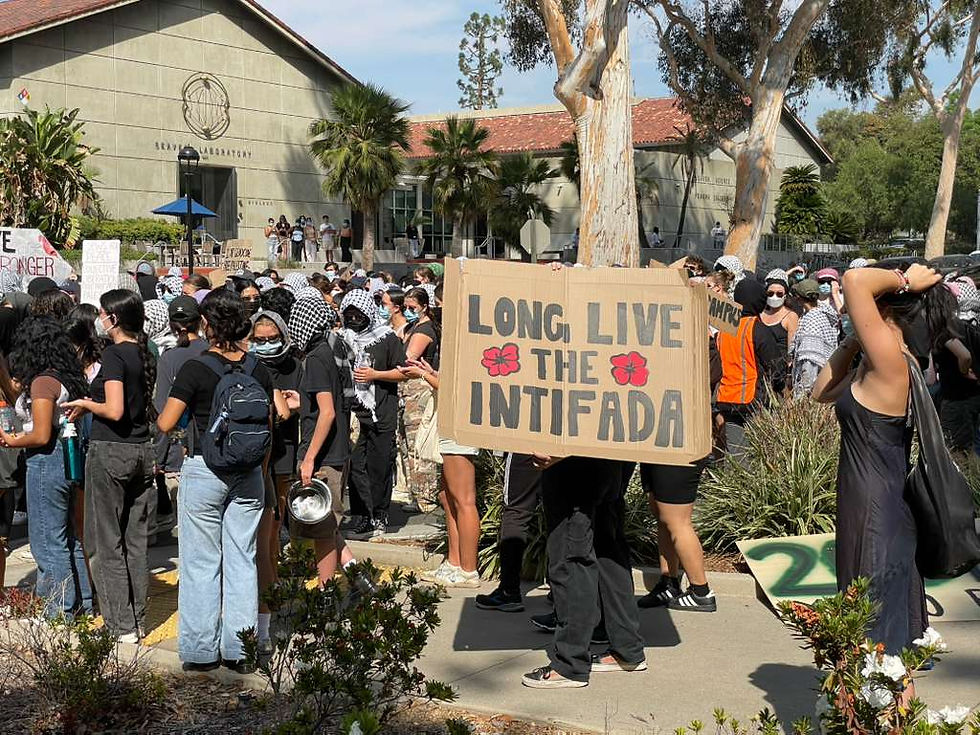
Pomona College resolved a Title VI complaint with the Brandeis Center, Anti-Defamation League and Hillel International on Wednesday, agreeing to adopt the International Holocaust Remembrance Alliance’s Working Definition of Antisemitism, appoint a Title VI coordinator, and update speech and demonstration policies, among other provisions.
“We are pleased to have resolved these important discussions through a thoughtful and comprehensive mediation process,” Pomona President Gabi Starr wrote in a statement to the Independent.
“At every step in the discussions over these last several months, the College stressed that any agreement must protect free speech (including peaceful protest), academic freedom and open inquiry; and must help us protect all our students, including Jewish and Israeli students, from discrimination and harassment,” Starr continued. “In every way, the agreement reached does so.”
The Title VI complaint was filed with the U.S. Department of Education’s Office for Civil Rights (OCR) last April by the Brandeis Center and ADL on behalf of several Jewish students who alleged experiencing antisemitism at Pomona.
The complaint stated that Jewish and Israeli Pomona students faced a “hostile campus” after the October 7 attacks as Pomona became a hotbed of pro-Palestine activism. A number of antisemitic incidents and protest actions in contravention of the College’s established policies are cited as areas of concern in the complaint. It also underscored that in most cases, violators faced little to no consequences, and that several Jewish students had transferred away from Pomona.
According to an email from Pomona President Gabi Starr, the College and complainants resolved the complaint through a voluntary mediation process with the support of a neutral OCR observer. Most of the conditions agreed to in the settlement will be in effect for a two-year “settlement period,” which will extend through the Spring 2028 semester. Starr also referred students to an FAQ website, which further elaborates on the policies and conditions agreed to in the settlement.
One of the most tangible provisions will be the appointment of a dedicated Title VI Coordinator to oversee adjudication of discrimination claims and ensure the College’s compliance with Title VI. Pomona will also update and expand its training protocols, with annual mandatory Title VI training for students, faculty and staff.
The Title VI training will explain prohibited antisemitic and Islamophobic harassment, provide examples, and detail how to report harassment and discrimination. Additional Title VI training will be mandated for students members of the Judicial Council (JBoard); Associated Students of Pomona College, Pomona’s student government; and the executive boards of Pomona’s registered student organizations.

Pomona will also establish an “Advisory Council on Jewish Life and Antisemitism,” which will consist of Jewish student leaders, staff, and outside community members, potentially including Claremont Hillel and Claremont Chabad leadership.
The Advisory Council will work with Pomona administrators to create programming and activities to improve the campus climate and promote understanding of Jewish history and culture, Israeli history, antisemitism, and the Holocaust.
Additionally, Pomona has agreed to offer lectures or workshops throughout the settlement period on the “modern manifestations of antisemitism and the connections between Judaism, Jewish identity, Israel, and Zionism,” and support programming about “Jewish identity, including the Zionist component of Jewish identity.”
President Starr announced on Tuesday that Pomona will carry out a campus climate survey this spring to determine if actions taken after the 2020 climate survey “have led to positive, lasting changes." The settlement agreement stipulates that Pomona will add questions from a pool prepared by Hillel International’s Campus Climate Initiative into the survey, with a particular focus on “enhancing questions specific to whether an individual has experienced or witnessed shared ancestry discrimination.”
When determining in complaint investigations if conduct is antisemitic, Pomona has agreed to consider the International Holocaust Remembrance Alliance’s (IHRA) Working Definition of Antisemitism:
“Antisemitism is a certain perception of Jews, which may be expressed as hatred toward Jews. Rhetorical and physical manifestations of antisemitism are directed toward Jewish or non-Jewish individuals and/or their property, toward Jewish community institutions and religious facilities.”
The College will also consider contemporary examples listed on the IHRA’s website, which include the following:
“Calling for, aiding, or justifying the killing or harming of Jews in the name of a radical ideology or an extremist view of religion.”
“Making mendacious, dehumanizing, demonizing, or stereotypical allegations about Jews as such or the power of Jews as collective — such as, especially but not exclusively, the myth about a world Jewish conspiracy or of Jews controlling the media, economy, government or other societal institutions.”
“Denying the fact, scope, mechanisms (e.g. gas chambers) or intentionality of the genocide of the Jewish people at the hands of National Socialist Germany and its supporters and accomplices during World War II (the Holocaust).”
“Drawing comparisons of contemporary Israeli policy to that of the Nazis.”
“Holding Jews collectively responsible for actions of the state of Israel.”
With Wednesday’s settlement, Pomona joins a small cohort of colleges that recently adopted the IHRA definition of antisemitism. Earlier this year, Harvard settled two Title VI lawsuits, expanding on its non-discrimination policies and incorporating the IHRA definition, and Columbia adopted the IHRA definition during its negotiations with the federal government.
Pro-Palestine and civil libertarian groups have opposed adoption of the IHRA definition, both by individual colleges and the federal government. After Harvard incorporated the IHRA definition, the Foundation for Individual Rights and Expression, a First Amendment watchdog, warned that “when added to policies used to punish discriminatory harassment on American campuses, the definition is too likely to be used to punish speech that is critical of Israel or its government but that is not motivated in animus against Jews or Israelis.”
The Brandeis Center maintains that the IHRA definition “does not, in and of itself, prohibit or punish any speech. Rather, it identifies hateful activity that others may choose to address in various ways depending on context. Like any civil rights tool, it must be used in a manner that is consistent with other applicable legal principles… the definition helps identify conduct which was carried out with anti-Semitic intent.”
Pomona also agreed to update the “Free Speech Requirements and Bias-Incidents” section of its website with a commitment “to support students and other community members who are victimized by offending speech that targets them based on their actual or perceived identity,” even in cases where free speech protections preclude the College from taking disciplinary action.
In these instances, where speech is investigated as a Non-Discrimination Policy or bias incident complaint but found to be “protected hate speech,” Pomona has committed to “communicate its opposition to stereotypical, derogatory opinions,” provide counseling and support to affected students, or “take steps to establish a welcoming and respectful school campus.”
Under California’s Leonard Law, Pomona cannot punish any speech that would be otherwise protected by the First Amendment, including that which may be considered “hate speech.” Only when speech crosses into harassment or other limited, unprotected categories could the College take disciplinary action.
The agreement also notes that Pomona will “implement and enforce a ban on masked protests” and revise its ID policy’s concealment clauses “to clarify compliance requirements, disciplinary sanctions, and potential exceptions.” Alongside these changes, the College will update its Encampment Policy to specify what conduct is in contravention of campus rules.
The College will make further policy changes with updates to its Flyer and Event Registration Policies and “make clear that any postings displaying or events promoting threats, obscenity, defamation, invasion of privacy, unlawful harassment, or that violate Pomona’s policies, rules, procedures, or the Pomona College Student Code are strictly prohibited.”
Pomona will also add examples to the Faculty Handbook alongside the already-included American Association of University Professors (AAUP) “Principles on Academic Freedom”
cautioning faculty against “pressur[ing] students to engage in political activism” or cancelling classes to accommodate campus demonstrations.
Additionally, the agreement stipulates that Pomona will work with the Claremont Consortium in an attempt to revise the Claremont Colleges Policy on Demonstrations. The policies that Pomona will “make a good faith effort” towards incorporating into the Policy on Demonstrations include “requir[ing] permits or other permissions in advance of protests or demonstrations,” specifying that “protests or demonstrations exceeding a certain number or threshold of people may only take place in certain designated areas on campus,” and “requir[ing] protesters, protests, and demonstrations to disperse when instructed to do so by an authorized College official.”

“These policy changes are long overdue, but they are nonetheless a significant and meaningful stride in the right direction,” a leader of Haverim, the Claremont Colleges Jewish Student Union, told the Independent in a statement.
“These new policies, partnerships, and task forces will not make antisemitism disappear from campus, but we are hopeful that they will contribute to a better community and learning environment for Jewish students in the coming years," the student leader continued. "An environment where Jewish students are free to express themselves without being demonized, ostracized, or harassed for their identity."
This semester, an October 7 memorial event held by Claremont Hillel at Pomona was disrupted by a small group of individuals, who shouted “Zionists not welcome here” and that the event’s attendees were “all complicit in genocide” before being chased out of the room by faculty and community members.
An anonymous statement released afterwards defended the disruptors’ actions, calling the October 7 survivor who was speaking at the event “Satan” and “the spawn of a genocidal lineage,” and referring to Zionism as a “death cult that must be dealt with accordingly.”
Pomona has since identified two of the four disruptors, neither of whom attend Pomona, and banned them from campus. Pomona has not said which Claremont College the two banned students attend.
“We hope the policies and practices affirmed in this settlement will help de-escalate the extreme rhetoric and disruptive behaviors that have affected campus life this past year,” said Claremont Hillel Executive Director Bethany Slater in a letter to the Hillel community. Claremont Hillel is separate from Hillel International, and was not a party to the complaint or the agreement.
Scripps College, another Claremont Consortium school, had a Title VI complaint filed against it by the Brandeis Center and ADL in February 2025. OCR opened an investigation into the women’s college shortly thereafter, though it is still ongoing.
Editor's note: This article has been updated to clarify that Pomona is not amending its Non-Discrimination Policy to include the IHRA definition. The College still agreed to "consider the IHRA definition when determining whether conduct is antisemitic," but has not codified it into the Non-Discrimination Policy.


The collision detection is so precise that you never feel cheated when you crash into something. If you hit an obstacle, it is because you were genuinely in the wrong place at the wrong time. Wave Rider is fair and honest in its mechanics.
One of the biggest reasons for Crossy Road's success is its perfect balance between simplicity and challenge.
Hey, I was genuinely anxious about how stressful foreign family travel may get before organizing this trip. Before the trip even starts, it's easy to feel psychologically worn out from packing, arranging travel documents, making gifts, and managing lengthy airport hours. I felt lot more at ease and ready for the journey after using Airportswheelchair. I felt much less stressed because the airport experience was less physically taxing and easier to manage. Even before we boarded the plane, that comfort made the trip much more enjoyable. It made it possible for us to concentrate more on the joy and excitement of commemorating such a significant family event.
Very nice Article Keep it up for your good Work Thanks for sharing information The content was really very interesting. I am really thankful to you for providing this unique information You have a good point here! Mundus sine Caesaribus
Wow its a very good post. The information provided by you is really very good and helpful for me. Keep sharing good information.I bookmark your blog because I found very good information on your Michael 2026 Outfits